
A 15-minute gap between patients doesn’t sound like much.
Neither does the 20 minutes you spend waiting for a case to start, the unexpected cancellation in your clinic, or the quiet stretch before your next appointment.
But add those fragments together across a busy week, and you may have a surprisingly valuable resource:
your unused time.
For physicians, the problem with most side hustles isn’t a lack of earning potential. It’s that they demand something doctors already have very little of—time.
Paid medical research takes a different approach. Instead of committing to another shift, finding consulting clients, or building a business from scratch, you can potentially use short periods of downtime to contribute your professional expertise to research.
Sermo is one platform built around this model. It sends healthcare professionals survey opportunities matched to their specialties and expertise, and its current guidance specifically recommends responding quickly because study quotas can fill.
For the busy physician: You don’t have to create a second career to earn from your expertise. A suitable research survey can potentially fit into the gaps that already exist in your schedule.
The Problem With Most Physician “Side Hustles”
Search for ways to make extra money as a doctor and you’ll find the usual suggestions:
- Start consulting
- Teach online
- Create a course
- Freelance
- Start a private business
- Pick up additional clinical shifts
There’s nothing inherently wrong with these options.
The problem is that most of them require dedicated blocks of time.
Consulting may require meetings.
Teaching requires preparation.
A course requires months of work before it can generate meaningful revenue.
Another clinical shift takes an entire evening, weekend, or day.
And if you’re already working long hours, adding another substantial commitment may defeat the purpose of earning extra income in the first place.
That’s why the between-cases model is worth considering.
Instead of asking:
“When can I fit another job into my schedule?”
You’re asking:
“What can I do with the time that’s already sitting unused?”
Your Downtime Doesn’t Have to Become Another Obligation
Imagine finishing with one patient earlier than expected.
You have 12 minutes before the next appointment.
That’s not enough time to start a consulting project.
But it may be enough time to answer a short research questionnaire.
Now imagine another 15-minute gap later in the day.
Then another 20-minute gap tomorrow.
Individually, these periods seem insignificant.
Together, they become usable fragments of time.
And that’s precisely what makes survey-based research different from traditional side work.
You’re not promising an employer that you’ll be available every Tuesday evening.
You’re responding when an appropriate opportunity is available and when you have the time to participate.
Sermo itself describes its survey model as a way for healthcare professionals to take surveys from home, between patients, or whenever it suits them.
What Are You Actually Doing During That Downtime?
You’re providing professional insight.
Medical research companies and healthcare organizations need opinions from people who understand medicine from the inside.
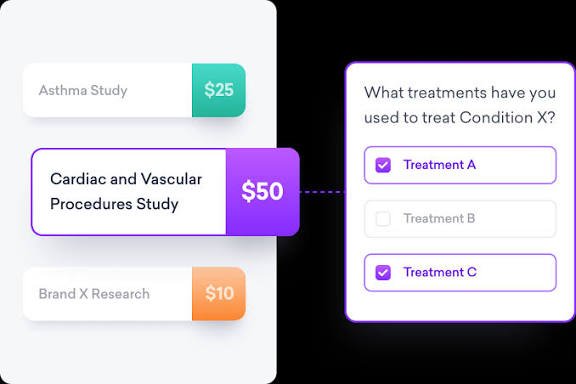
Depending on the study, you might be asked about:
- Treatments you use
- Conditions you encounter
- Medical devices
- Prescription decisions
- Patient management
- Healthcare technology
- Treatment challenges
- Industry trends
- Your experience with particular therapies
This isn’t the same as answering a generic consumer survey about your favorite brand of coffee.
Your professional background is the reason you’re being invited.
Sermo says its survey invitations are tailored to members’ specialty and expertise.
What Makes the Time Valuable?
The attraction isn’t simply that a survey can pay you.
It’s the relationship between time and compensation.
Suppose, purely as an example, a particular research survey offered $50 and required 15 minutes.
The mathematical equivalent would be:
$50 ÷ 0.25 hours = $200/hour
That does not mean Sermo guarantees a $200 hourly rate.
It simply demonstrates why a short, well-paid research opportunity can be attractive when compared with taking on a traditional side job.
And not every survey will have that kind of time-to-payment ratio.
Some opportunities may pay only a few dollars. Others can be much more valuable.
Sermo currently says survey rewards vary by study, with the amount shown in each invitation.
The important question isn’t:
“How much does Sermo pay per hour?”
It’s:
“Is this particular opportunity worth the amount of my time?”
That’s a much more useful way for a busy physician to evaluate it.
From a Few Dollars to High-Value Research
Sermo’s promotional materials have highlighted survey opportunities ranging from $5 to $500, depending on the study.
That wide range makes sense when you consider how different research projects can be.
A short, broad questionnaire may require relatively little time.
A specialized study may be looking for a very specific group of physicians and require much more detailed professional insight.
So don’t look at the $500 figure and assume every survey will pay hundreds of dollars.
Instead, think of the platform as having different levels of opportunity.
A quick survey might simply turn a few unused minutes into a small payment.
A more substantial research project can potentially make a much bigger contribution to your supplemental income.
And Sermo states that eligible physicians can earn up to $15,000 per year—but that’s an upper potential, not a guaranteed annual salary.
Why Your Specialty Can Make a Difference
Your medical expertise isn’t interchangeable with someone else’s.
A cardiologist and a dermatologist may both be physicians, but a research company looking for insight into a specific cardiac treatment isn’t going to get what it needs from a dermatologist.
That’s why specialty matters.
Sermo says that members’ specialties and other profile information help determine survey eligibility. It also recommends keeping your profile current so that you receive relevant opportunities.
This creates an interesting advantage for physicians:
The more specialized your expertise, the more specific the research opportunities you may be able to qualify for.
That doesn’t guarantee more income—but it explains why survey opportunities aren’t distributed equally among all healthcare professionals.
You Don’t Have to Accept Every Opportunity
Another advantage of this model is control.
Receiving a survey invitation doesn’t mean you have to complete it.
You can look at the opportunity and decide whether the expected reward is worth your time.
Maybe you’re between cases and have 20 minutes available.
A suitable survey might make sense.
Maybe you’re exhausted after a long shift.
You can skip it.
That’s fundamentally different from a scheduled side job where someone else controls when you’re expected to show up.
How to Make Your Downtime More Productive
If you’re using paid research specifically as a between-cases opportunity, your approach matters.
Keep Your Profile Updated
Sermo recommends keeping details such as your specialty, sub-specialty, country, and career status current because these affect survey eligibility.
Turn On Survey Notifications
Sermo recommends enabling survey invitation emails so you can know when relevant opportunities become available.
Don’t Wait Too Long
Research studies can have limited quotas.
Sermo specifically advises responding quickly because spaces can fill.
Use Downtime—Not Patient-Care Time
The goal is to monetize genuine free time, never to let a survey interfere with patient care, clinical responsibilities, or professional obligations.
How Much Could This Add Up To?
There’s no universal answer.
One physician might participate occasionally and earn a relatively small amount.
Another might qualify for more relevant studies and participate regularly.
And someone who happens to qualify for several higher-value opportunities could have a much stronger month.
Sermo’s own current materials say it paid more than $20 million in honoraria to HCPs worldwide in the previous year, illustrating that paid research is a substantial part of its model.
But that figure is platform-wide, not an indication of what an individual physician should expect to earn.
Your own results will depend on your profile, specialty, location, study availability, qualification, and participation.
What About the $15,000 Annual Potential?
Sermo states that eligible physicians can earn up to $15,000 per year.
It’s worth putting that number in the proper context.
Reaching $15,000 would mean averaging approximately:
$1,250 per month
That’s possible only if a physician consistently has enough qualifying opportunities and participates at a level that supports that total.
It shouldn’t be interpreted as:
“Join Sermo and you’ll make $15,000.”
Instead, treat it as the upper end of Sermo’s stated earning potential.
For many physicians, the more realistic objective may simply be to turn otherwise unused time into incremental supplemental income.
Why This Can Be More Sustainable Than a Traditional Side Hustle
The biggest benefit isn’t necessarily the amount you earn from one survey.
It’s the lack of a large additional commitment.
You’re not:
- Taking another shift
- Managing employees
- Finding consulting clients
- Creating advertisements
- Building a website
- Maintaining inventory
- Creating an online course
You’re simply contributing your professional perspective when a suitable research opportunity is available.
That’s why this model can appeal particularly to physicians who want additional income without another lifestyle disruption.
The Between-Cases Mindset
The goal isn’t to turn every spare minute into money.
You need breaks.
You need rest.
And sometimes the best use of ten minutes is simply to breathe before seeing your next patient.
But when you genuinely have downtime and want to use some of it productively, paid medical research offers another option.
Instead of thinking about your schedule as:
Work → work → work → free time → work
you can recognize that there are small gaps where your professional expertise might be useful to someone conducting healthcare research.
That’s the real appeal.
Not another job.
A flexible opportunity that can fit around the job you already have.
Final Verdict
For physicians, the biggest barrier to earning extra income isn’t always a lack of opportunities.
It’s time.
A traditional side hustle can demand hours of planning, preparation, marketing, and commitment.
Paid medical research works differently.
Sermo allows eligible healthcare professionals to receive research opportunities matched to their expertise, and its current platform promotes the ability to participate from home, between patients, or whenever their schedule allows.
Survey compensation can range from smaller payments to opportunities advertised at up to $500, while Sermo states that eligible physicians can earn up to $15,000 annually.
Neither should be treated as guaranteed income.
The smarter way to approach it is simple:
Don’t create more time for a side hustle. Use some of the time you already have.
Frequently Asked Questions
Can I really use Sermo between patients?
Sermo says physicians can take surveys from home, between patients, or whenever it suits them. However, surveys should only be completed when you genuinely have free time and doing so doesn’t interfere with patient care or other professional responsibilities.
How much can a Sermo survey pay?
Sermo’s opportunities vary by study. Its promotional materials have highlighted payments ranging from $5 to $500, while the current support documentation says the reward is shown in each individual invitation.
Can Sermo really provide $15,000 a year?
Sermo states that eligible physicians can earn up to $15,000 per year. This is an upper earning potential, not a guaranteed annual income.
Do I need to accept every survey?
No. You can decide which opportunities are worth your time.
How can I receive more relevant surveys?
Keep your specialty and professional profile information updated and enable survey notifications. Sermo specifically recommends both steps for staying aware of relevant opportunities.
Related Articles
- Sermo vs InCrowd: Which Platform Pays Doctors More?
- Sermo vs M3 Global Research: Which Platform Is Better for Doctors to Earn?
- Best Paid Survey Sites for Physicians Compared
- Real Sermo Earnings: What Doctors Can Actually Expect
- How to Monetize Your 10-Minute Clinic Delays (Without Seeing More Patients)