
If you’re a physician or healthcare professional looking for paid medical surveys, one of the most common questions is simple:
Is Sermo actually legit—or just another survey platform that overpromises and underdelivers?
This concern is valid. Many survey websites advertise easy earnings but fail to provide consistent opportunities or transparent payouts.
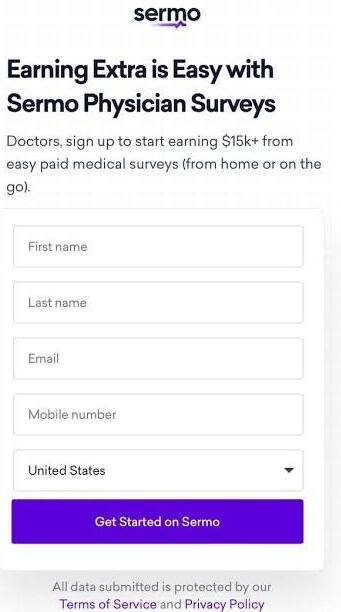
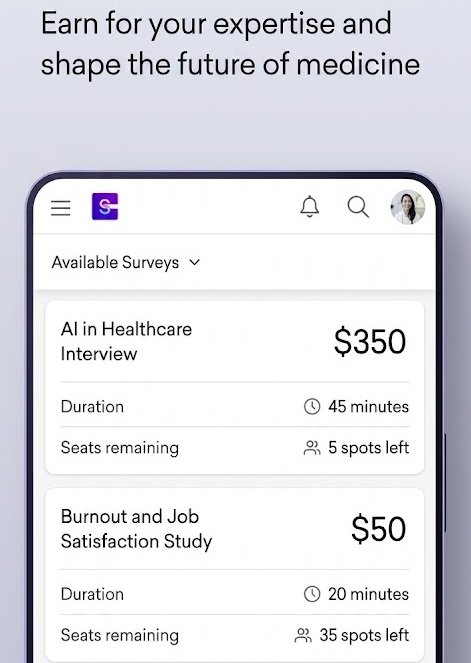
Sermo, however, has built its platform specifically for verified healthcare professionals, offering paid medical surveys ranging from $5 to $500 per study. According to Sermo, eligible physicians can earn up to $15,000 per year through survey participation and research opportunities.
Free registration • Surveys from $5–$500 • Eligible physicians can earn up to $15,000/year, according to Sermo.
What Is Sermo?
Sermo is a physician-focused platform that connects verified healthcare professionals with paid research opportunities.
It is not a general survey website. Instead, it is designed specifically for:
- Physicians
- Dentists
- Pharmacists
- Nurse practitioners
- Other licensed healthcare professionals
The platform allows members to participate in medical surveys, share clinical insights, and engage in professional discussions.
Is Sermo Legit?
Yes—Sermo is considered a legitimate platform for healthcare professionals.
Here’s why:
- It verifies medical credentials before granting access to surveys
- It works with pharmaceutical companies, healthcare organizations, and research institutions
- It offers structured survey compensation
- It has a global network of verified healthcare professionals
Unlike generic survey websites, Sermo does not allow open public registration without professional verification.
How Sermo Verification Works
One of the strongest indicators of legitimacy is Sermo’s credential verification process.
Before accessing paid surveys, healthcare professionals may need to provide:
- Active medical license information
- Issuing authority and expiration date
- Medical school and graduation year
- National Provider Identifier (NPI) for U.S. physicians
- Professional hospital, university, or clinic email address
- Additional documentation such as a medical license, diploma, or physician ID if automatic verification is not possible
This ensures that only qualified healthcare professionals participate in surveys.
For researchers, this improves data reliability. For members, it increases access to higher-value studies.
How Much Does Sermo Pay?
Sermo offers a structured survey payment system based on complexity and time required.
Survey Payment Ranges
- Quick surveys: $5–$30
- Standard surveys: $30–$150
- Specialized studies: Up to $500
These ranges depend on:
- Medical specialty
- Years of experience
- Country of practice
- Survey difficulty
- Demand for specific expertise
How Much Can You Realistically Earn?
Earnings on Sermo are not fixed because survey availability varies.
However, typical participation levels look like this:
| Participation Level | Monthly Earnings |
|---|---|
| Occasional | $50–$200 |
| Regular | $200–$600 |
| Active | $600–$1,000+ |
According to Sermo, eligible physicians can earn up to $15,000 per year through paid medical surveys and research opportunities. This represents the upper potential, not a guaranteed income.
What Makes Sermo Different from Other Survey Sites?
Many survey platforms are open to the general public, which often leads to:
- Lower-quality responses
- Fewer relevant surveys for doctors
- Lower payouts
Sermo is different because it is built exclusively for healthcare professionals.
Key differences include:
1. Verified Healthcare Community
Only licensed healthcare professionals can access paid surveys.
2. Specialty-Based Matching
Surveys are matched based on clinical background and expertise.
3. Structured Payment System
Clear ranges from $5 to $500 per survey.
4. Research Partnerships
Works with pharmaceutical companies, healthcare organizations, and medical researchers.
Is Sermo Safe and Trustworthy?
Yes. Sermo is widely used by healthcare professionals globally.
Its legitimacy is supported by:
- Credential verification requirements
- Professional healthcare network
- Structured survey compensation model
- Long-standing presence in medical research communities
However, like all survey platforms, it does not guarantee consistent income, since survey availability depends on demand and eligibility.
Pros and Cons of Sermo
Pros
- Free to join for eligible healthcare professionals
- Verified medical community
- Surveys paying $5–$500
- Opportunity for up to $15,000/year (according to Sermo)
- Relevant clinical research topics
Cons
- Survey availability varies
- Not all members qualify for high-paying surveys
- Income is not guaranteed
Frequently Asked Questions
Is Sermo really legit?
Yes. Sermo is a legitimate platform used by verified healthcare professionals for paid medical surveys and clinical discussions.
How does Sermo make money?
Sermo partners with pharmaceutical companies, healthcare organizations, and research institutions that pay for physician insights.
Can you really earn $15,000 per year?
According to Sermo, eligible physicians can earn up to $15,000 per year. Actual earnings depend on survey availability, specialty, and participation level.
How much does each survey pay?
Survey payments typically range from $5 to $500, depending on length and complexity.
Final Verdict
Sermo is a legitimate and established platform for healthcare professionals who want to earn extra income through medical surveys.
It is not a get-rich-quick system, but rather a structured research platform that rewards physicians for sharing their clinical expertise.
With survey payments ranging from $5 to $500 and an stated earning potential of up to $15,000 per year for eligible physicians, Sermo stands out as one of the more credible options in the medical survey space.
For doctors looking for flexible, expertise-based side income, it remains a strong and trustworthy option.
Related Articles
- Sermo vs InCrowd: Which Pays Doctors More?
- Sermo vs M3 Global Research: Which Platform Is Better for Doctors to Earn?
- Best Paid Survey Sites for Physicians Compared