
Doctors spend years building specialized knowledge, clinical experience, and professional judgment. Pharmaceutical companies, medical device manufacturers, healthcare organizations, and market research firms often need exactly that expertise.
And some of them are willing to pay physicians for it.
Paid medical surveys give doctors an opportunity to share professional opinions about medications, treatments, medical devices, healthcare technology, clinical practices, and patient care in exchange for compensation.
For physicians looking for flexible supplemental income, this can be appealing. You don’t necessarily need to take another regular shift or commit to a second job. Instead, you can participate in research opportunities when a study matches your professional background.
But finding the best paid medical surveys for doctors isn’t as simple as searching for the highest dollar amount.
A survey promising $500 isn’t necessarily better than a $50 survey if it takes several hours, has complicated requirements, or rarely matches your specialty.
The better question is: Which medical survey platforms offer legitimate research opportunities that are relevant to your expertise and worth your time?
Let’s look at what doctors should consider.
What Are Paid Medical Surveys for Doctors?
Paid medical surveys are market research or research studies that collect insights from qualified healthcare professionals.
Instead of asking the general public about their shopping habits or consumer preferences, these studies may ask physicians about topics such as:
- Treatment decisions
- Prescription medications
- Medical devices
- Patient management
- Clinical workflows
- Healthcare technology
- Treatment preferences
- Unmet clinical needs
- Experiences with specific therapies
- Developments within a medical specialty
For example, a pharmaceutical company developing a treatment might want to understand how physicians currently manage patients with a particular condition.
A medical device manufacturer might want feedback from surgeons who regularly use a particular type of equipment.
A healthcare technology company might want to know how physicians currently use digital tools in their practice.
In each case, the researcher isn’t looking for just anyone.
They’re looking for someone with relevant professional experience.
That’s what makes medical surveys different from ordinary consumer survey websites.
What Makes a Medical Survey Platform Good for Doctors?
Not every survey platform is equally useful for physicians.
When comparing your options, there are several factors worth considering.
Professional Verification
A legitimate healthcare research platform should have a process for determining whether participants actually have the professional qualifications they claim.
This matters because researchers paying for medical expertise need reliable respondents.
Credential verification may involve confirming your professional role, license, specialty, or other professional information.
Specialty-Based Matching
This is one of the biggest advantages a medical-specific platform can offer.
A dermatologist shouldn’t have to spend hours answering surveys designed for cardiologists.
Similarly, a researcher looking for oncologists needs access to oncologists rather than a database of general consumers.
The more detailed your professional profile, the better the platform can potentially match you with relevant studies.
Transparent Compensation
Before participating, you should understand what the study offers.
Look for clear information about:
- Compensation
- Estimated time commitment
- Payment method
- Payment timing
- Eligibility requirements
Be cautious when a website advertises enormous earning potential but provides little information about how those earnings are actually generated.
Variety of Research Opportunities
The best platforms aren’t necessarily limited to traditional questionnaires.
You may encounter:
- Online surveys
- In-depth interviews
- Telephone interviews
- Video research
- Research consultations
- Patient diaries
- Other qualitative research activities
Having different formats available can create more opportunities to monetize your professional expertise.
Sermo: One Medical Research Platform Doctors Can Consider
Sermo is a global healthcare professional community that also provides eligible members with paid research opportunities.
The platform is built around healthcare professionals rather than general consumers.
Sermo states that research opportunities can be matched according to professional information such as specialty, sub-specialty, country, and career status. Individual studies have their own eligibility requirements.
That distinction is important.
Joining Sermo doesn’t mean you’ll automatically qualify for every research study.
Instead, your professional profile helps determine which opportunities may be relevant to you.
For physicians who are new to paid medical research, our How to Get Paid for Medical Surveys: A Guide for Doctors & Healthcare Professionals explains the process from registration and verification to receiving compensation.
How Much Do Paid Medical Surveys Pay Doctors?
There isn’t one universal rate.
Medical survey compensation can vary dramatically from one study to another.
Factors that can affect payment include:
- Your specialty
- Your professional experience
- Your location
- The research topic
- Survey length
- Study complexity
- Whether the research requires an interview
- How difficult it is for the researcher to find qualified participants
Sermo’s published information describes opportunities ranging from smaller payments for short surveys to several hundred dollars for more extensive research activities.
This is why you’ll sometimes see medical research opportunities advertised at $5, $25, $50, $100, $200, $500, or more.
The higher amount doesn’t necessarily mean the platform is better.
It may simply reflect a more demanding research project or a participant group that is harder to recruit.
If you’re specifically interested in understanding why medical survey compensation varies so much, How Much Do Medical Surveys Pay? A Doctor’s Guide to $5–$500+ Studies goes into the payment structure in greater detail.
Why Do Some Medical Surveys Pay Hundreds of Dollars?
At first glance, several hundred dollars for a survey might sound excessive.
But consider what the researcher is actually purchasing.
They aren’t simply paying someone to answer multiple-choice questions.
They may be paying for access to a physician with:
- Years of medical education
- Clinical experience
- Specialty-specific knowledge
- Experience treating particular patients
- Knowledge of specific medications
- Familiarity with medical devices
- Understanding of healthcare decision-making
If a pharmaceutical company needs opinions from 20 physicians who regularly prescribe a particular class of medication, finding those physicians can be considerably more difficult than recruiting 20 ordinary consumers.
The professional expertise is the product.
That’s why specialized medical research can command higher compensation.
Types of Paid Medical Research Doctors Can Find
Paid medical research can take several forms.
Online Surveys
These are the most familiar.
You may answer questions about your clinical experiences, treatment decisions, medications, devices, or opinions about healthcare products.
Some can be completed relatively quickly.
In-Depth Interviews
An interview allows researchers to explore your professional opinions in much greater detail.
These can take longer than online questionnaires but may offer substantially higher compensation.
Telephone Research
Some studies involve speaking with a researcher over the phone.
The discussion may focus on your clinical experience, treatment approach, or use of a particular healthcare product.
Video Interviews and Consultations
Research can also take place through video calls.
These may be particularly useful when the researcher needs detailed qualitative feedback from a specialist.
Patient Diaries and Longer Studies
Some research involves providing information over a longer period rather than completing one questionnaire.
The time commitment and compensation depend on the specific study.
Sermo’s published earning information includes online surveys, phone or in-depth interviews, and patient diary opportunities among the types of research available to healthcare professionals.
For physicians interested specifically in higher-paying consultation-style opportunities, our article Beyond the Screen: How Sermo’s 60-Minute Consults Pay $200–$500+ explores how these opportunities differ from ordinary surveys.
Which Doctors Are Most Likely to Find Paid Medical Surveys?
There isn’t one specialty that automatically guarantees more opportunities.
Research companies need different types of professionals for different studies.
Depending on the current research demand, opportunities may target:
- Primary care physicians
- Surgeons
- Cardiologists
- Oncologists
- Dermatologists
- Psychiatrists
- Neurologists
- Emergency physicians
- Pediatricians
- Other medical specialists
A highly specialized physician may occasionally be particularly valuable when a research company needs a very specific type of expertise.
However, that doesn’t mean specialists should expect constant high-paying invitations.
Research demand changes.
A specialty that is heavily targeted during one period may have fewer relevant studies later.
Can Residents and Other Healthcare Professionals Take Paid Medical Surveys?
Physicians aren’t necessarily the only professionals who can participate.
Depending on the platform and study, opportunities may also be available to:
- Medical residents
- Nurses
- Physician assistants
- Nurse practitioners
- Pharmacists
- Other qualified healthcare professionals
Sermo supports multiple healthcare professional categories, although eligibility varies by study.
This is particularly relevant for residents because some research platforms have opportunities specifically designed around career stage.
How to Choose the Best Paid Medical Survey Platform
If you’re considering several platforms, don’t judge them by their highest advertised payment alone.
Instead, compare them using these criteria.
1. Eligibility
Does the platform accept healthcare professionals in your country?
Does it support your professional role?
2. Specialty Matching
Does it collect enough information about your specialty and experience to provide relevant opportunities?
3. Payment Transparency
Can you clearly see how compensation works?
Are payment methods and conditions explained?
4. Research Quality
Does the platform appear to connect professionals with genuine healthcare research rather than generic consumer questionnaires?
5. Time-to-Payment
How long does it take to receive your compensation after completing a study?
6. Research Variety
Are you limited to short online questionnaires, or can you also participate in interviews, consultations, or other research formats?
7. Reputation
Look for established platforms with transparent policies, professional verification, and clear support resources.
How to Get More Medical Survey Opportunities
Even after joining a legitimate platform, you won’t necessarily receive a constant stream of invitations.
There are ways to improve your chances of receiving relevant opportunities.
Keep Your Professional Profile Updated
Make sure your specialty, sub-specialty, career stage, and other professional details are accurate.
If your professional situation changes, update your profile.
Complete Your Profile Thoroughly
A detailed profile gives the platform more information with which to match you to research.
Turn On Notifications
Some studies have limited participant quotas.
If you don’t see the invitation until days later, the study may already be full.
Respond Promptly
You don’t need to rush through the research itself.
But when an opportunity looks relevant, reviewing it promptly can prevent you from missing studies that fill quickly.
Answer Screening Questions Honestly
Don’t exaggerate your experience to qualify for a higher-paying study.
Researchers are specifically looking for participants who genuinely match their requirements.
Accurate answers also help maintain the quality of your profile.
Are High-Paying Medical Survey Claims Legitimate?
Some are.
But this is an area where doctors should be particularly careful.
Seeing “$500 per survey” doesn’t mean you’ll receive $500 every time you log in.
High-paying research opportunities may require:
- Specific specialties
- Particular prescribing experience
- Years of clinical experience
- A particular practice setting
- An interview rather than a questionnaire
- A significant time commitment
So the highest advertised payment shouldn’t be your only measure of whether a platform is worth joining.
Instead, look at the overall opportunity.
A platform offering several relevant $25–$100 studies may be more useful to you than one advertising a rare $500 opportunity that you never qualify for.
Can Doctors Make $1,000 a Month From Medical Surveys?
It’s possible for some physicians to generate substantial supplemental income, but it shouldn’t be treated as guaranteed.
Your results depend on:
- How many studies you qualify for
- How often researchers need your specialty
- The compensation of those studies
- How much time you have available
- Your geographic location
- The types of research opportunities available
Our article Can Doctors Really Make $1,000 a Month From Paid Medical Surveys? looks more closely at what would actually have to happen for a physician to reach that level.
The key takeaway is simple:
Paid medical surveys can generate additional income, but the income is variable.
Are Paid Medical Surveys Worth It for Doctors?
For many physicians, they can be.
The main advantage is flexibility.
You aren’t necessarily committing to another job with fixed hours. Instead, you can evaluate individual research opportunities and decide whether the compensation is worth your time.
They can be particularly attractive if you want to:
- Monetize your professional expertise
- Earn supplemental income
- Participate in healthcare research
- Explore emerging treatments and technologies
- Use spare time productively
- Avoid taking on another regular clinical commitment
However, you should also consider the opportunity cost.
If a study takes an hour and pays $20, you may decide that your time is better spent elsewhere.
If a specialized research interview pays $300 for an hour and matches your expertise perfectly, the calculation looks very different.
That is why the effective value of your time matters more than the headline payment.
What Should Doctors Watch Out For?
Paid medical research is legitimate, but that doesn’t mean every website advertising it is.
Watch out for platforms that:
- Promise guaranteed income
- Demand payment just to access surveys
- Provide no clear information about the company
- Hide compensation details
- Make exaggerated earnings claims
- Request unnecessary sensitive information
- Have no transparent privacy policy
- Don’t explain how professional credentials are handled
A legitimate research opportunity should make the basic terms understandable before you invest significant time.
You should also be cautious about any platform that encourages you to misrepresent your qualifications.
Your medical expertise is precisely what makes you valuable to researchers. There is no reason to compromise that credibility just to qualify for a particular study.
The Bottom Line: Which Paid Medical Surveys Are Best for Doctors?
The best paid medical survey opportunities aren’t necessarily the ones with the biggest dollar sign.
For doctors, the strongest platforms are those that combine:
- Legitimate healthcare research
- Professional verification
- Specialty-based matching
- Transparent compensation
- Multiple research formats
- Convenient participation
- Reliable payment processes
Sermo is one platform worth considering because its research community is built around healthcare professionals rather than general consumers.
The number of opportunities you’ll receive will still depend on your specialty, location, career stage, and the research currently being conducted.
If you’re interested in paid medical research, starting with a reputable healthcare-focused platform makes more sense than signing up for dozens of generic survey websites.
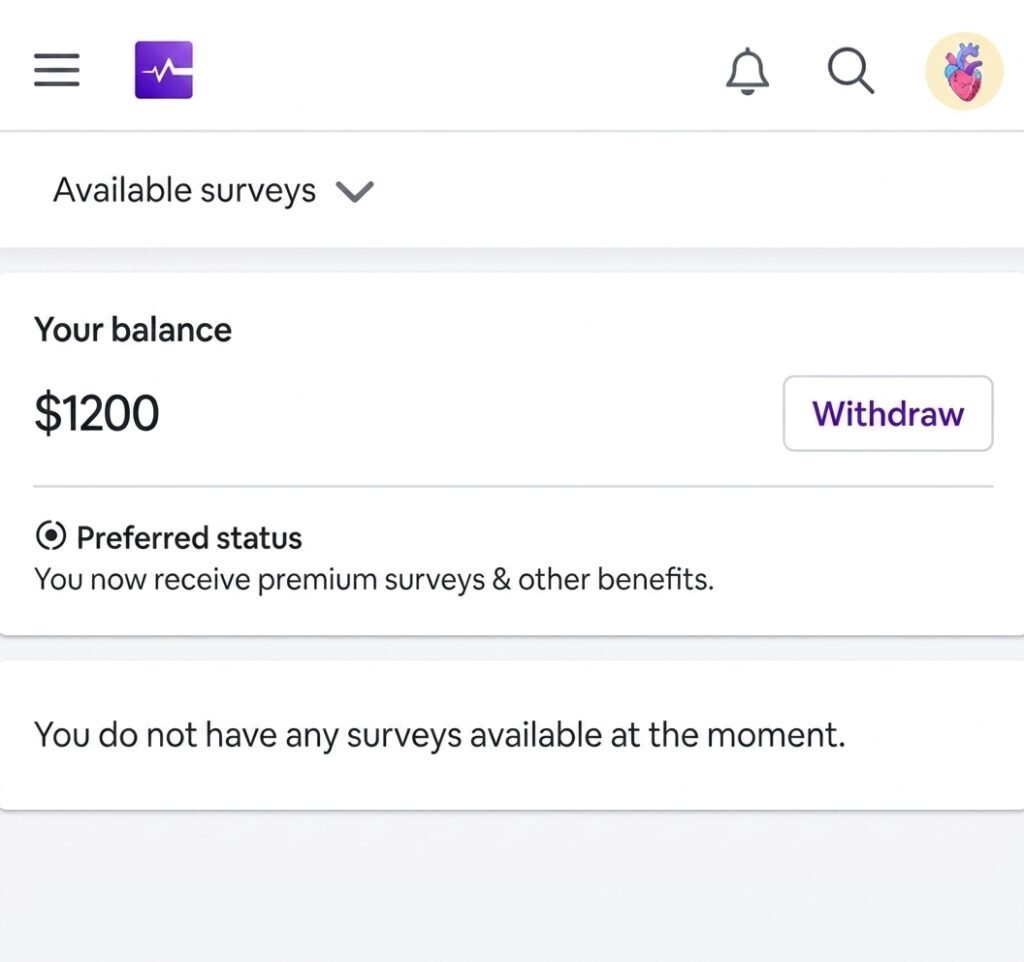
And remember: the goal isn’t to chase the biggest advertised payment. It’s to find legitimate studies where your expertise is genuinely valuable and the compensation makes your time worthwhile.
If you’ve already invested years developing your medical expertise, exploring legitimate ways to earn from that knowledge could be worth your time.
That doesn’t guarantee a particular income or number of invitations. It simply gives you the opportunity to see whether your professional background matches the research opportunities currently available.