
A patient cancels. The next appointment hasn’t arrived yet. You’re waiting for a colleague, a procedure to start, or simply have ten unexpected minutes between cases.
For most physicians, those small gaps disappear into scrolling, checking messages, or simply catching your breath before the next demand.
But what if some of that fragmented time could be used to earn from the medical expertise you’re already using every day?
That’s where paid medical research becomes interesting.
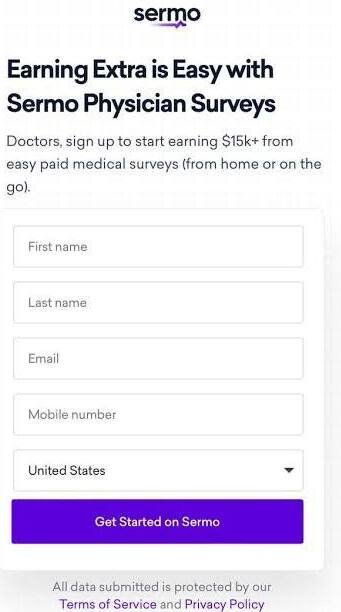
Quick answer: Sermo gives verified healthcare professionals access to paid medical surveys and research opportunities. Some opportunities pay just a few dollars, while others can pay up to $500. Sermo states that eligible physicians can earn up to $15,000 per year, although actual earnings vary and aren’t guaranteed.
Your 10-Minute Gaps Are More Valuable Than They Look
Physicians don’t necessarily need another side job.
That’s the problem with most conventional “side hustle” advice.
Freelancing can mean finding clients. Consulting can involve meetings. Starting a business requires marketing. Even picking up another clinical shift means sacrificing an entire block of your schedule.
But your workday already contains something valuable:
small pockets of professional knowledge and experience.
A ten-minute gap may not be enough to start a freelance project.
It may, however, be enough to answer a focused research questionnaire asking about your experience with a particular treatment, medical device, condition, or clinical workflow.
That’s the basic idea behind physician-paid research platforms such as Sermo.
What Are You Actually Getting Paid For?
You’re not being paid simply for clicking through questions.
Medical research companies need professional perspectives from people who actually understand the healthcare environment.
A physician may be asked about:
- Treatment preferences
- Clinical decision-making
- Experience with particular therapies
- Medical devices
- Patient management
- Healthcare technology
- Treatment challenges
- Trends within their specialty
Your everyday clinical experience can therefore become the qualification that makes you valuable to a research study.
And unlike traditional consulting, you don’t necessarily need to schedule a meeting or prepare a presentation.
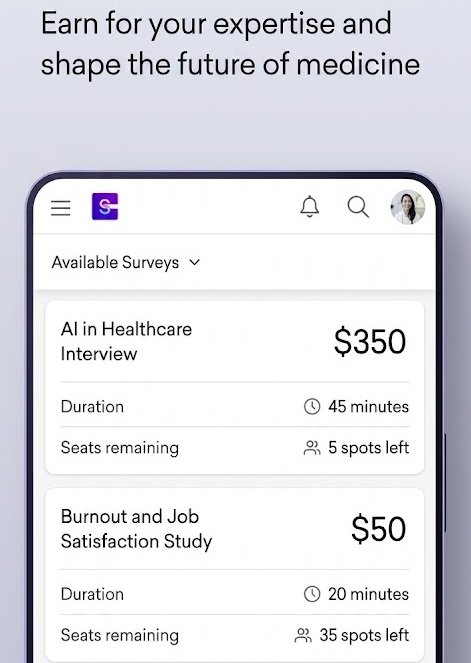
The Difference Between a $10 Survey and a $500 Study
Not every Sermo opportunity is going to make a significant difference to your income.
Some surveys may pay around $5, while other shorter opportunities can pay more.
Then there are standard research studies that can offer considerably higher compensation.
At the upper end, Sermo promotes opportunities paying up to $500.
The important part is understanding why there’s such a large range.
A quick questionnaire aimed at a broad group of healthcare professionals doesn’t require the same level of specialization as a study looking for physicians with a very specific clinical background.
So rather than thinking:
“Every Sermo survey pays $500.”
Think:
“My professional expertise can qualify me for research opportunities with very different compensation levels.”
That is a much more realistic way to approach the platform.
What Could a 10-Minute Gap Actually Be Worth?
Here’s where the concept gets interesting.
Imagine, purely as an example, that you receive a $50 survey that takes 15 minutes to complete.
The mathematical equivalent would be:
$50 ÷ 0.25 hours = $200/hour
That doesn’t mean Sermo pays physicians $200 per hour.
It simply illustrates the time value of a short, high-paying research opportunity.
If you’re already sitting between appointments with nothing productive to do, a short paid research task can have a very different opportunity cost from taking on a traditional side job.
And if the opportunity takes longer, the equivalent hourly rate naturally falls.
The point isn’t to chase an imaginary hourly wage.
It’s to recognize that small amounts of free time can have monetary value when paired with the right opportunity.
You Don’t Need to Rearrange Your Clinical Schedule
This is perhaps the biggest appeal for busy physicians.
A traditional side job asks:
“When can you give us two or three hours every week?”
Paid research can instead fit around:
“Do you have a few minutes right now?”
That distinction matters.
You can potentially participate:
- Between appointments
- During suitable breaks
- After finishing a shift
- While waiting between cases
- At home when you have spare time
You’re not committing to a recurring shift.
You’re choosing whether a particular opportunity is worth your time.
What About the $15,000 Annual Claim?
Sermo states that eligible physicians can earn up to $15,000 per year through its research opportunities.
That number is worth understanding—but not taking out of context.
It does not mean a physician can simply sign up and expect $1,250 every month.
Your actual earnings can depend on:
- Your specialty
- Your location
- Your professional profile
- Available research studies
- How often you qualify
- How frequently you participate
A physician who only completes occasional low-paying surveys could earn relatively little.
Someone who regularly qualifies for higher-value studies could potentially earn considerably more.
So the $15,000 figure should be viewed as Sermo’s stated upper earning potential, rather than a promised annual income.
Why Your Specialty Matters
Research demand isn’t equal across every specialty.
A research company may urgently need insights from physicians who regularly encounter a particular condition or use a particular type of treatment.
They don’t want random survey respondents.
They want professionals who actually understand the subject.
That’s why physician survey platforms can offer substantially more than generic consumer survey websites.
Your specialty and professional experience determine which studies are relevant to you.
It also explains why one physician may receive opportunities that another physician never sees.
Sermo Isn’t Just Another General Survey Website
This distinction is important.
On a typical consumer survey platform, your opinion about everyday products might be worth a small amount.
On a physician research platform, you’re contributing professional expertise.
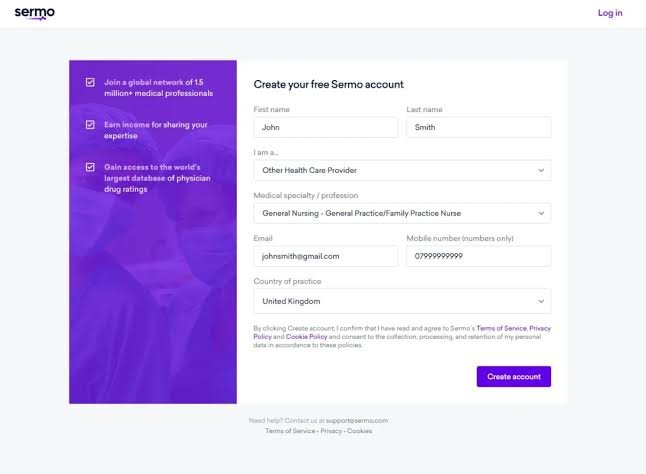
Sermo also verifies healthcare professionals during registration, which helps researchers ensure they’re obtaining responses from qualified professionals.
Depending on the physician and location, verification can involve professional information such as medical license details, medical school information, NPI for U.S. physicians, or professional email/documentation where necessary.
That verification is part of what makes the medical research model different from simply completing random online surveys.
Is This Actually a Side Hustle?
It can be—but it’s probably better described as supplemental income.
There’s no guaranteed number of surveys.
There’s no guaranteed monthly payment.
And you shouldn’t expect every ten-minute gap in your schedule to turn into money.
But that’s also what makes this model relatively low-commitment.
You’re not building a second business.
You’re not finding clients.
You’re not advertising yourself.
You’re simply making your professional perspective available for research opportunities when suitable studies are available.
The Real Advantage: No New Skill Required
One of the most overlooked aspects of this type of income is that you’re not starting from zero.
You’ve already spent years building:
- Medical knowledge
- Clinical experience
- Specialty expertise
- Patient-care experience
- Professional judgment
Paid medical research simply creates a potential way to monetize some of that expertise outside direct patient care.
For a physician who doesn’t want another demanding commitment, that can be more appealing than learning an entirely new online skill.
Who Should Consider This?
Sermo may be worth exploring if you’re a verified healthcare professional who:
- Has occasional downtime
- Wants supplemental income
- Doesn’t want another fixed work schedule
- Is comfortable sharing professional opinions for research
- Prefers flexible opportunities
- Wants to monetize existing expertise rather than learn a new skill
It may not be suitable if you’re expecting guaranteed monthly income or a replacement for your clinical salary.
The Bottom Line
You don’t need to find another eight-hour job to make your spare time more valuable.
Sometimes, ten minutes is enough to do something useful.
Sermo gives eligible healthcare professionals the opportunity to participate in paid medical research, with survey compensation ranging from $5 to $500 and a stated potential of up to $15,000 per year for eligible physicians.
The key is keeping expectations realistic.
You won’t necessarily earn money every time you have ten free minutes. You won’t necessarily qualify for the highest-paying research. And the $15,000 figure isn’t guaranteed.
But if you already have small pockets of downtime and valuable clinical expertise, paid medical research offers an interesting way to turn some of those otherwise unused minutes into potential supplemental income.
Frequently Asked Questions
Can I really complete Sermo surveys in 10 minutes?
Some paid research opportunities may be relatively short, but survey length varies. You should always consider the actual time required before deciding whether an opportunity is worthwhile.
How much can a short Sermo survey pay?
Sermo promotes opportunities ranging from $5 to $500. Shorter surveys generally won’t be at the top of that range, while highly specialized studies can offer substantially higher compensation.
Can physicians make $15,000 a year from Sermo?
Sermo states that eligible physicians can earn up to $15,000 annually. Actual earnings depend on survey availability, specialty, location, eligibility, and participation.
Do I have to complete every survey invitation?
No. You can decide whether an available research opportunity is worth your time.
Is Sermo suitable for physicians with busy schedules?
The flexible nature of survey participation can make it appealing to busy healthcare professionals, particularly those who have occasional gaps in their schedules.
Related Articles
- Sermo vs InCrowd: Which Platform Pays Doctors More?
- Sermo vs M3 Global Research: Which Platform Is Better for Doctors to Earn?
- Best Paid Survey Sites for Physicians Compared
- Real Sermo Earnings: What Doctors Can Actually Expect